COVID-19 during pregnancy can trigger maternal immune activation, potentially disrupting placental homeostasis and fetal
neurodevelopment, with effects depending on gestational stage. Given the challenges to source fetal tissue, the brain-placenta axis allows us to use placenta to study
neurodevelopment and its molecular mechanisms. This study aimed at exploring genes in fetal
neurodevelopment and the placenta of pregnant people with
COVID-19 and understanding its differences across two mid-gestation periods. We meta-analyzed six placenta transcriptome datasets from COVID-infected pregnant people. The
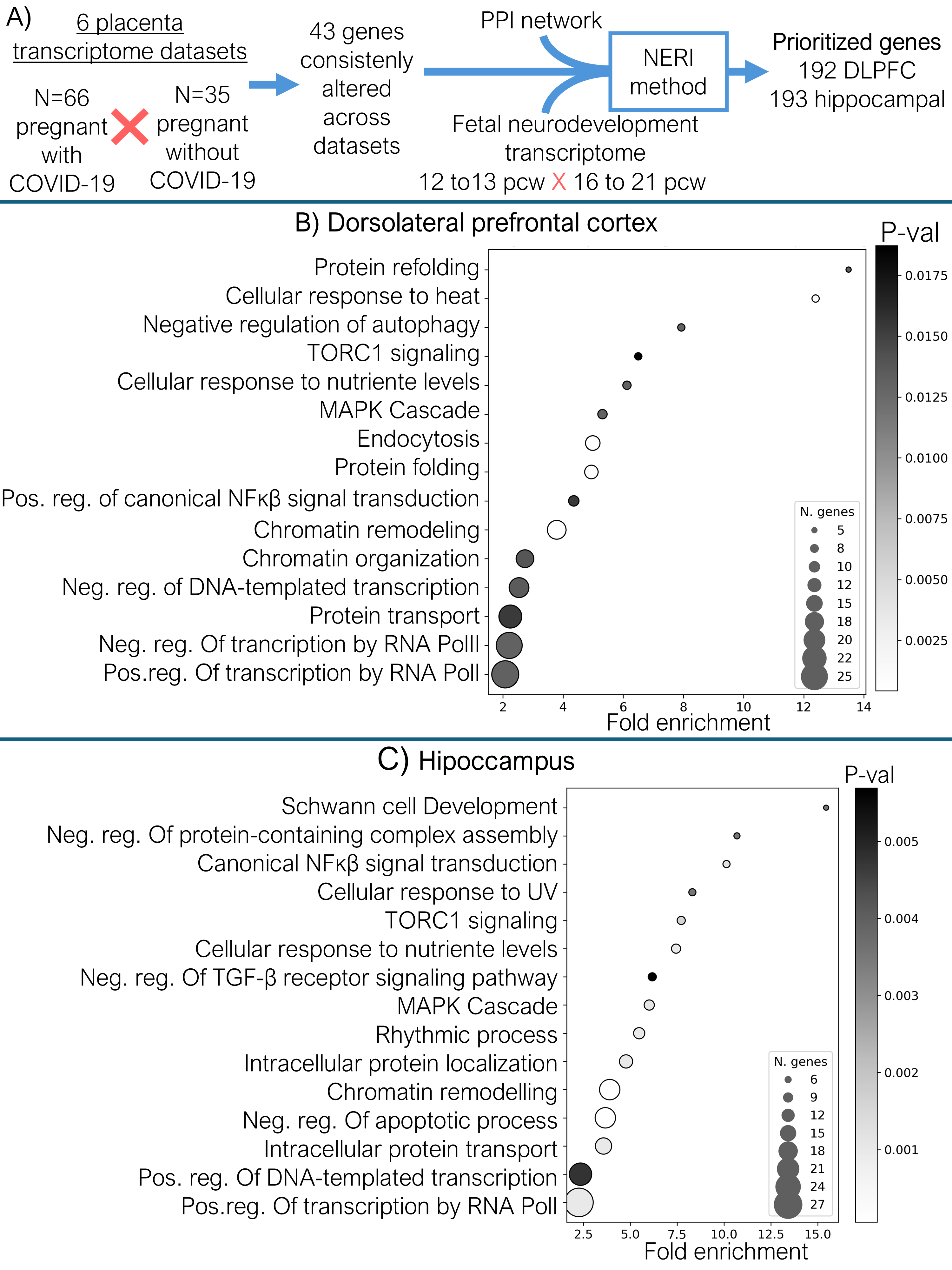
network medicine-based method NERI integrated the meta-analysis results into the protein-protein interaction (PPI) network BIOGRID and two healthy neurodevelopmental transcriptome datasets with data at the 12-13 post-conceptional weeks (pcw) and 16-21 pcw stages, from regions corresponding to the dorsolateral prefrontal cortex (DLPFC) and the hippocampus. Genes prioritized by NERI were tested for enrichment of genes from the neurodevelopmental disorders (NDD) interactome and Gene Ontology (GO) terms. The meta-analysis identified 43 genes consistently altered in the placenta of COVID-infected pregnant people. Their integration with PPI and fetal transcriptomes selected 193 hippocampal and 192 DLPFC genes (Figure 1A). NDD interactome genes were enriched in the selected genes from both DLPFC (139 genes, p-val = 4.19∙10
25) and hippocampus (122 genes, p-val = 4.98∙10
20). The GO analyses revealed enrichment of terms related to TORC1, MAPK and NFκβ, and others associated to
neurodevelopment (Figure 1B-C). These results indicate that gestational
COVID-19 may influence neurodeveloment in a time-dependent manner. Our study presents candidate pathways for future research on how viral infections affect the developmental origins of NDDs.