Skip to contentSkip to filters

Epidemiology workshops

7 upcoming

December 2026

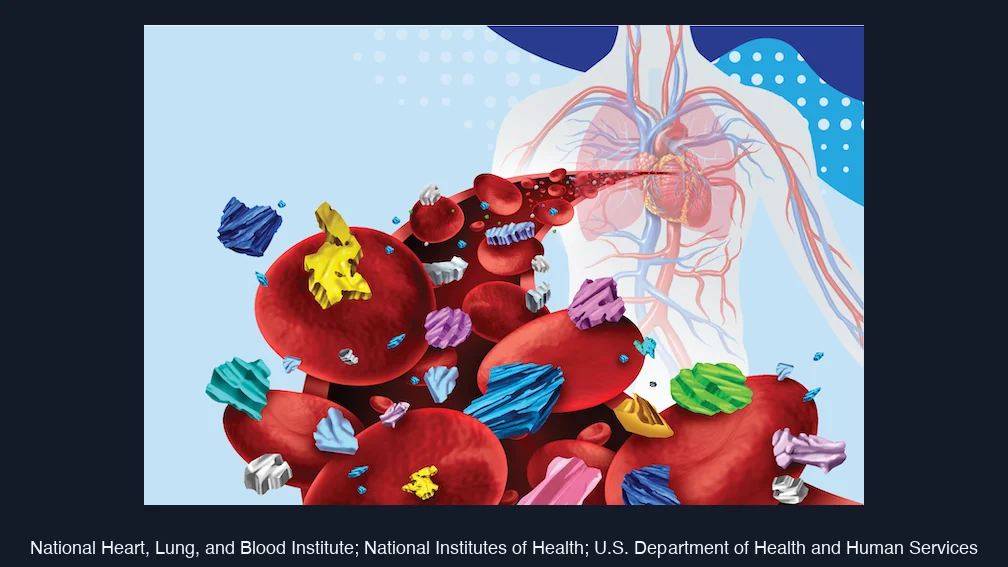
This virtual NHLBI–NIEHS workshop examines how exposure to micro- and nanoplastics and PFAS forever chemicals across the lifespan affects heart, lung, blood and sleep disorders, and identifies research gaps and opportunities. Basic scientists, clinicians, epidemiologists, toxicologists, environmental and data scientists and community representatives discuss multi-omics and AI approaches in birth cohorts, animal models and organoids, and how clinical trials could incorporate technology-based interventions, exposure assessment and implementation science. Sessions run 10:00 on 7 December to 15:45 on 8 December (US Eastern).

Dec 7–8, 2026

Environmental Toxicology

March 2027

Cancer Genomic Epidemiology

Hinxton, United Kingdom

Researchers examine how genetic and environmental factors interact to influence cancer risk. The course uses lectures, case studies and group discussions to connect study design and genomic analysis to questions of cancer causation and prevention.

Mar 15–18, 2027

Genetic Epidemiology

May 2027

The school introduces students and young researchers to several important research directions in mathematical biology, with a focus on deterministic mathematical models of complex biological processes such as population dynamics, epidemiology, tumour growth and respiratory function. Part of the programme covers modelling of biological populations with structured population dynamics and transport equations, including the McKendrick-Von Foerster models and renewal equations for populations structured by age, size or other physiological characteristics, and their qualitative properties such as stability, long-term behaviour and pattern formation. Another component addresses epidemiological models based on the SIR framework and its extensions and the design of optimal control strategies, with applications to plant epidemiology and crop protection. The programme also presents models in oncology, from simple systems of ordinary differential equations to structured populations and mixture theory, describing interactions between tumour cells and their microenvironment and the effects of treatment, and introduces fluid dynamics relevant to biology, including the incompressible Navier-Stokes equations and flows such as ventilation and gas diffusion in the lungs. Emphasis is placed on connecting theoretical analysis with practical applications, using optimal control, asymptotic analysis and numerical methods. Tentative courses: models in oncology (introductory); structured population dynamics, Emeric Bouin (advanced); epidemiology and population dynamics, Suzanne Touzeau (introductory); introduction to fluid dynamics, Thierry Goudon and Céline Grandmont (introductory); and models for the respiratory tract, Céline Grandmont (advanced). The school is designed for Master's students, PhD students and young researchers with a background in mathematics, and is taught in English.

May 17–28, 2027

Mathematical Biology
Abstracts close Jan 17, 2027

Antimicrobial resistance (AMR) has emerged as one of the most urgent threats to global public health, undermining decades of progress in infectious disease control. This FEBS Advanced Lecture Course is designed for early-stage researchers from industry and academia and explores the multidisciplinary aspects of AMR, from monitoring and surveillance and molecular mechanisms to the design and development of targeted strategies. The programme opens by framing the scale of the crisis, translating surveillance data into strategic health priorities and quantifying the global burden of bacterial resistance with modern AMR monitoring tools. A substantial part addresses the biology of resistance and persistence: biomaterial-associated infections, biofilm formation on microplastics, bacterial stress-response systems and the signalling pathways governing survival in opportunistic pathogens such as Pseudomonas aeruginosa. Novel molecular targets are also explored, including bacterial G-quadruplexes as emerging drug targets and bioisostere-based approaches to antimicrobial design. The course then covers next-generation therapeutic strategies designed to circumvent traditional resistance mechanisms: light-activated porphyrin-based photosensitizers, smart nanosystems for targeted antimicrobial delivery, adjuvant therapy platforms for high-throughput screening, immunotherapies against bacterial infections and magisterial phage therapy as a clinical alternative to conventional antibiotics. Sessions on host–pathogen interactions, from advanced infection-modelling platforms to pathogen–immune dynamics in paediatric populations, provide mechanistic insight for drug discovery, giving participants an integrated view of how surveillance data, molecular biology and translational innovation shape future infection control and antimicrobial stewardship.

May 31 – Jun 4, 2027

Microbiology
Abstracts close Mar 31, 2027

This intensive 10-day CIMPA school bridges theoretical research and practical application through expert-led lectures and hands-on computer labs on between-host and within-host disease dynamics, stochastic modelling and the integration of machine learning with mechanistic models such as physics-informed neural networks. Participants work in small mentored groups on research projects that are presented at the school and later at the poster session of the International Conference on Mathematical Biology (ICMB-2027) in Pokhara. The tentative programme includes an introductory course on the full modelling workflow, from formulating real-world problems to building ordinary, partial, delay and stochastic differential equation models and evaluating, validating and applying them to public-health scenarios; introductory and advanced courses on biological data and model parameters, covering nonlinear least squares, maximum likelihood, Bayesian inference with MCMC, identifiability, uncertainty and sensitivity analysis (Latin hypercube sampling, PRCC, bootstrapping), AIC/BIC model selection and cross-validation; mathematical epidemiology of between-host transmission, from SIR and SEIR models to heterogeneous populations and contact networks, reproduction numbers and real-world applications; mathematical immunology and virus dynamics, including immune responses, multiple timescales, immune evasion and viral persistence in HIV, COVID-19 and hepatitis; stochastic modelling of epidemics with branching processes, Gillespie algorithms, random networks, Markov chains, stochastic differential equations and extinction probabilities; rigorous analysis of equilibria, stability, bifurcations and persistence in between-host and within-host models with case studies on dengue, measles and COVID-19 and on interventions such as vaccination, treatment and vector control; and machine learning for disease modelling, including hybrid approaches for forecasting outbreaks. Programming sessions in MATLAB and Python cover parameter estimation, data fitting, model validation, sensitivity analysis and stochastic, between-host and within-host simulation.
May 31 – Jun 9, 2027

Mathematical Biology
Registration closes Jan 31, 2027

June 2027

Frontiers in Causal Inference

Chicago, United States · Hybrid

Causal inference underpins research across the social, health and environmental sciences. This workshop gathers researchers and practitioners advancing its methods and applications to address the design of complex experiments, overt and hidden bias in observational studies, data integration from diverse sources, treatment-effect heterogeneity, and the use of AI to scale and enhance causal analysis. Bringing together experts from statistics, biostatistics, epidemiology, economics, computer science and related fields, it highlights recent progress, fosters cross-disciplinary dialogue and looks for new directions in designing and analysing causal studies in data-rich settings, with implications for evidence-based policy and decision-making in health, economics and the social sciences. All registrants, online and in person, receive Zoom links and can attend online. In-person seats are limited and in-person registrants must wait for an invitation from IMSI before travelling; invited in-person participants pay a non-refundable fee of $25 (students) or $50 (non-students).

Jun 7–11, 2027

Statistics

September 2027

Mood Disorders

Long Island, United States

Six-day workshop on the molecular, cellular and systems changes underlying disturbed brain function in bipolar disorders, covering clinical and epidemiological aspects and the genetic, neurobiological and immune-metabolic underpinnings of these disorders, with discussion of controversies in the field. Attendees reside at the Banbury Center; the cost including board and lodging is US$3,360, with stipends available.

Sep 25 – Oct 1, 2027

Psychiatry
Abstracts close Jul 16, 2027

End of results.