Skip to contentSkip to filters

We use cookies for analytics.

Hydrodynamics conferences

7 upcoming

December 2026

Flow transitions and instabilities in interfacial and field-driven flows arise across natural and engineered systems, from coating flows, film reactors, microfluidics and space-enabling technologies to geophysical flows and physiological flows such as pulmonary flow and corneal drainage, and they produce rich dynamics with complex spatio-temporal wave patterns. While instabilities can hinder conventional processes, they also allow controlled pattern formation from micro- to macro-scales, with emerging uses in additive manufacturing and soft materials. Understanding them requires combined experimental, theoretical and computational work spanning stability analysis, reduced-order modelling, direct numerical simulation and molecular-level approaches. This IUTAM Symposium reviews current progress in modelling and experiments on these instabilities and their use in designing new materials and processes, covering micro- and macro-scale instabilities, field-mediated control, film flows and wave dynamics, fluid–fluid and fluid–structure interactions, complex fluids and soft matter, multiphase flows, nonlinear dynamics, reduced-order modelling and molecular-scale modelling of interfaces, through invited oral talks and poster sessions.

Dec 7–11, 2026
Fluid Dynamics

Complex fluids and their instabilities underlie a wide range of natural phenomena and engineering systems, spanning biological transport, soft matter, granular media and environmental and energy processes, where subtle microstructural rearrangements can trigger striking macroscopic patterns and transitions. This IUTAM Symposium brings together theory, computation and experiment with emphasis on microstructure–flow interactions, pattern formation in complex fluids, and applications in microfluidics, granular transport and sustainable energy. Themes include the fundamental physics of complex fluids and instabilities (nonlinear rheology, interfacial instabilities, viscoelastic and multiphase flow dynamics), granular and active matter (sand dunes, jamming, collective motion in active suspensions, granular–fluid coupling), energy, environment and sustainability (porous-media flows, CO₂ capture, sediment transport, geophysical flow instabilities, renewable energy), and AI and machine learning in fluid mechanics, through oral talks and posters. Hosted on the IIT Madras Zanzibar campus, it emphasises capacity building, early-career researchers and participation from Africa and other under-represented regions.

Dec 14–18, 2026

Fluid Dynamics

Active fluids are materials made of self-propelled units, such as living cells, synthetic micro-swimmers or motor proteins, that consume free energy locally to do mechanical work; this continuous energy input keeps them out of equilibrium and produces spontaneous flow patterns and transitions, large-scale collective motion and unusual rheology, while internal active stresses raise questions about how they couple with flow and how instabilities and turbulence arise. Much of the field rests on active matter theory, the statistical mechanics of self-propelled agents interacting sterically and hydrodynamically, which has explained many emergent phenomena but leaves open challenges. This IUTAM Symposium brings together fluid mechanics, statistical physics, biological physics and materials science to discuss active turbulence, spatiotemporal self-organisation, flow–structure interaction, topological excitations, odd viscoelasticity, nonreciprocity and machine-learning applications, and to look beyond the classical framework: how mechanochemical coupling and bioenergetics control living active fluids, whether phase transitions in active fluids can be understood through nonequilibrium thermodynamics, and what design principles govern active flow networks with desired mechanical functions.

Dec 16–20, 2026

Fluid Dynamics

April 2027

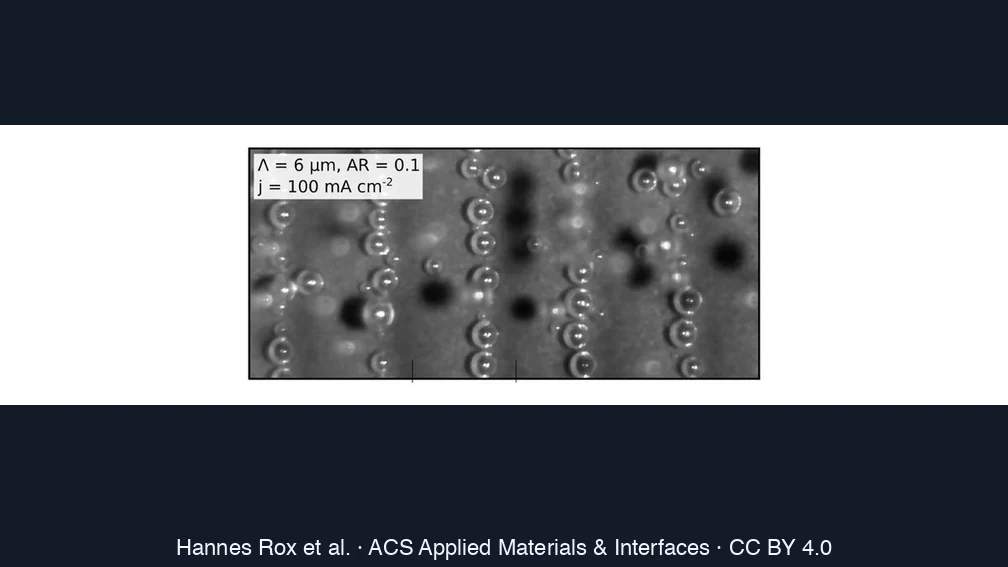
Electrochemical multiphase flows involve a complex interplay of flow, heat and mass transfer, electrical and capillary effects. This EUROMECH Colloquium addresses fundamental fluid dynamics questions that govern the evolution and transport of gas bubbles and thereby the efficiency of electrochemical devices, with particular focus on interfacial phenomena at electrodes and gas–liquid interfaces, from bubble nucleation to departure, wetting and coalescence, and the influence of electric fields and surfactants. It also covers related developments in numerical and experimental techniques and emerging trends in electrode design such as surface texturing and porous electrodes.

Apr 12–14, 2027

Electrochemistry

June 2027

This EUROMECH Colloquium focuses on recent advances in experimental measurement techniques that give new physical insight into multiphase flow behaviour across a wide range of spatial and temporal scales. Multiphase flows have complex dynamics and are central to many natural and industrial processes, yet remain difficult to investigate. Experts in advanced imaging techniques for multiphase flows will address droplet formation, breakup and coalescence, bubble dynamics and transport in particle-laden flows, assessing the limitations of current methods and defining future directions for multiphase flow measurement through interdisciplinary collaboration.

Jun 28 – Jul 1, 2027

Fluid Dynamics

August 2027

EFDC3, hosted by ETH Zurich under the auspices of the EUROMECH Society, is the third conference in the European Fluid Dynamics Conference series, which merged the former European Fluid Mechanics Conference (EFMC) and European Turbulence Conference (ETC) into the major meeting of Europe’s fluid dynamics community. Contributions are organised by scientific topic and by mini-symposium. Topics span aerodynamics; artificial intelligence in fluid mechanics and turbulence; planetary and astrophysical fluid mechanics; atmospheric and geophysical flows and turbulence; atomization, sprays, bubbles and droplets; biological, bio-inspired and biomedical flows; boundary layers and wall-bounded flows in experiment, simulation and theory; combustion; compressible flows; computational fluid dynamics, large-eddy simulation and lattice Boltzmann methods; convection and rotating fluids; experimental techniques; flow control; fluid–structure interaction; free-surface flows and waves; granular, porous-media, non-Newtonian and particle-laden flows; heat transfer and phase change; instability and transition; intermittency and scaling; jets and free shear flows; magnetohydrodynamics; micro- and nanoscale flows; multiphase flows and turbulence; quantum computing for fluids; superfluid turbulence; interfacial flows; suspensions; transport and mixing; vortex dynamics and coherent structures; and wind- and hydro-power. Announced mini-symposia address energy transfer through triad interactions and phase dynamics in turbulence, flow through porous surfaces, wave–turbulence interaction, marine particle transport, turbulent flows over rough surfaces, manifold-based reduction of the Navier–Stokes equations, and a mini-symposium in memory of Julian Hunt. Invited speakers include Eberhard Bodenschatz, Valeria Garbin, George Haller, Taraneh Sayadi, Philippe Spalart and Outi Tammisola, and a Young Scientist Award recognises presenting authors aged 35 or younger.

Aug 30 – Sep 3, 2027

Fluid Dynamics

Abstracts close

September 2027

This EUROMECH Colloquium addresses the dynamics of drops and bubbles in turbulent flows, including fragmentation, coalescence and turbulence–interface interactions, processes that matter in natural systems and industrial applications but remain hard to predict because of their multiscale nature. It brings together experimental, simulation and modelling experts to discuss high-resolution techniques, interface-resolved methods and data-driven approaches, with key themes including surfactant effects, pairwise interactions and the development of benchmarks. Contributions are invited on advanced numerical methods and simulations, innovative experimental techniques and diagnostics, modelling of coalescence, breakage and interfacial dynamics, population balance modelling and closure strategies, and data-driven and machine-learning approaches for drop- and bubble-laden turbulence, with the aim of interdisciplinary collaboration and new standards for understanding and modelling turbulent multiphase flows.

Sep 8–10, 2027

Fluid Dynamics

Abstracts close

End of results.